
Turnaround windows do not move. Neither do school start dates, hospital licensing inspections or the week the ground freezes. General Contractors of Casper builds for owners who live with dates like that. We are a commercial and industrial general contractor serving Casper, Natrona County and the I-25 corridor, and we run jobs backward from the date that matters.
This page says what we build, where we build it and how we work. It is short on adjectives on purpose.
Casper is Wyoming's second-largest city, with 59,038 residents in the 2020 census, and its economy has always followed energy. The Salt Creek field north of town has produced oil since the early part of the last century and is still being worked with carbon dioxide recovery. The refinery on East Highway 20-26 has 30,000 barrels per day of capacity and runs mostly Wyoming and Rocky Mountain sweet crude. A coal-fired power station stands down the road at Glenrock, and oilfield-services yards, fabrication shops and machine shops fill the lots in between.
An energy economy runs in cycles. Casper has seen what happens when a major employer leaves: the old refinery on the river closed in 1991, took hundreds of jobs with it and left a site that is still being redeveloped. Owners here remember that. They do not overbuild, they do not like surprises, and they want buildings that can be sold, leased or repurposed when the market turns.
We build to that standard. A shop should be useful to the next tenant. A yard should drain. An office wing should be cheap to heat in January. We give honest advice about what a building needs and what it does not, because over-spending on the wrong thing is the easiest way to hurt an owner in a down year.
The work breaks into five groups.
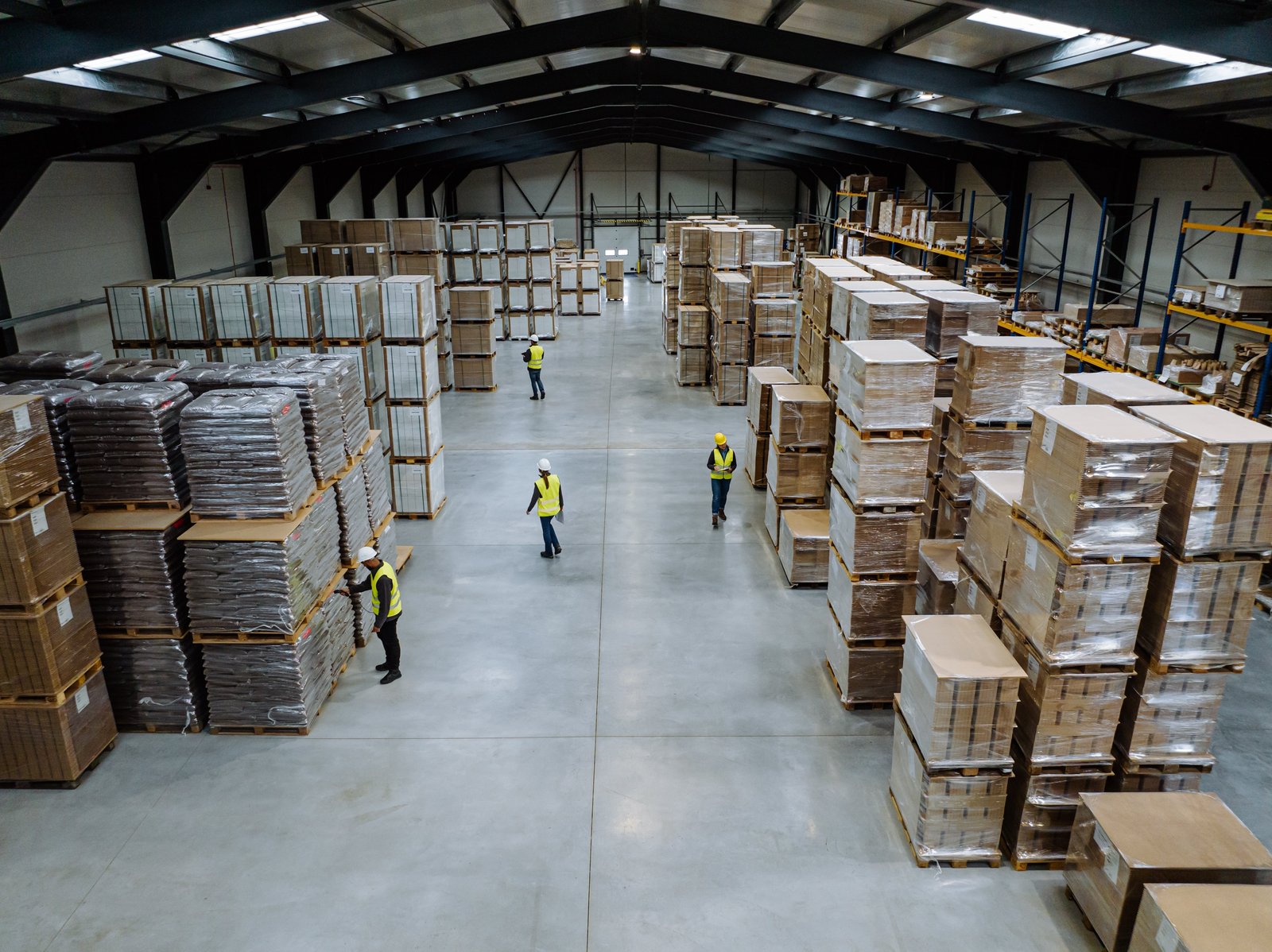
Yard and shop buildings. Equipment bays, fabrication shops, warehouses, crew facilities and offices for oilfield-services companies, contractors and manufacturers. Most are steel. We build a lot of pre-engineered metal buildings because they go up quickly, hold a large open floor and can be expanded later. Slabs get real attention, since a shop with a cracked or settling floor is a shop with a maintenance problem.
Site and yard work. Grading, drainage, utilities, laydown areas, parking and truck courts and dock aprons. Casper sites take a beating from heavy trucks, so subgrade, base and concrete thickness are designed for loads, not just for appearances.
Health, education and public buildings. Clinics, medical offices, school work, college facilities, municipal buildings and civic spaces. These owners work from budgets, boards and formal procurement, and they often need the building to stay in use during construction.
Commercial buildings. Offices, retail, restaurants, hotels, storage facilities, apartments and tenant improvements, including renovation and adaptive reuse of older buildings downtown and along Yellowstone Highway.
Aviation and logistics buildings. Hangars, warehouses, cold storage and rail-served industrial space near the airport and the logistics hub, including the crane buildings and heavy slabs that those operations need.
Our home market is Casper itself, from downtown and the Old Yellowstone District to Wyoming Boulevard, Poplar Street and the north side along the I-25 exits at Wardwell, Westwinds and Ormsby Roads. Casper College occupies more than 200 acres on a hill between the mountain and the river, and the city-owned events center on Events Drive draws crowds that affect access around nearby sites.
The east side is the industrial side. Along US 20 and 26 toward Evansville, owners put up the yard buildings and shops that refinery and oilfield work require. We know what it takes to build there, and we describe it in detail on our page for the east Casper refinery corridor. Mills, Bar Nunn and Evansville are all within easy reach, and the airport sits northwest of town on 5,150 acres with two long runways and a business park that houses more than 35 businesses.
Rail and trade have their own spot. The Casper Logistics Hub is listed at 984 acres and is part of Foreign Trade Zone 157, with a rail yard nearby that handles everything from bentonite to wind-energy components. Owners there care about turning radius, slab strength and how fast a building can go from plan to occupied.
Beyond town, we go where the work is: Glenrock and Douglas along the interstate, Midwest and Edgerton at the edge of the oilfield, and smaller communities out toward Alcova and the mountain. Distance and weather are priced honestly.
We build for oilfield-services and fabrication businesses, property owners, developers, healthcare groups, schools, public agencies and logistics operators. For manufacturers and fabrication shops, our focus is function: crane capacity where it is needed, doors that fit the trucks, power that matches the machines and floors that stay flat.
Hospital work has a different rhythm. Wyoming Medical Center is a 249-bed Level II trauma center, and when its West Tower went up it rose four stories with sky bridges tied to an occupied hospital. That is the kind of condition we plan for in hospital and healthcare construction: patients keep arriving, so noise, dust, vibration and utility shutdowns are coordinated with the staff who run the building. When a facility cannot close, we use phased construction with clear boundaries and short written look-aheads.
We build commercial and industrial projects in Casper and Natrona County, including shops, yards, warehouses, offices, medical and school facilities, retail, restaurants, hotels, hangars and rail-served industrial space. We also provide site development, concrete work, tenant improvements, renovations and demolition.
Yes. We plan backward from fixed dates, whether that is a turnaround window, a lease start or a school opening. Long-lead items are ordered early, and the schedule shows what happens if a delivery or a weather window slips.
We set wind limits for crane picks and wall panel erection before the lift, design footings below the local frost line, price cold-weather concrete protection when placements fall in winter and carry weather allowances in the schedule instead of treating each storm as a surprise.
Yes. We take work in Mills, Bar Nunn, Evansville, Glenrock, Douglas and the oilfield communities such as Midwest and Edgerton. Travel and delivery distances are included in the price and the schedule from the beginning.
The City of Casper lists the 2024 International Codes, with local amendments in Title 15 of the Casper Municipal Code. Requirements outside the city depend on the jurisdiction, so we confirm the adopted edition with the building department before we price.